

Article written by Alexander – Founder and Owner of swissdiverswatches.com
An Introduction to the Top 50 Luxury Watch Brands In The World – 2025 Edition
Ten years ago, in 2015, I published an article ranking the top 15 luxury watch brands in the world: Top 15 Luxury Watch Brands Ranking. The article was well received, and it has remained one of the most visited pages on Swiss Divers Watches ever since.
Now, a decade later, it is time to revisit the ranking—this time with a broader scope and more refined criteria. The 2025 edition expands the ranking from 15 to 50 brands and redefines how these watchmakers are assessed.
Rather than placing excessive weight on brand recognition, marketing, and customer perception, this new ranking emphasizes eight (8) evaluation criteria and five (5) distinct levels of ranking.
In other words, this ranking is not based on sales volume or popularity. Instead, it represents a horological authority assessment grounded in craftsmanship, innovation, heritage, finishing standards, and technical legitimacy — produced by a specialist Swiss diver’s-watch publication.
This is a rather long article, so if you haven’t got the time or patience to read it all, just click on the table of contents down below and pick the particular subject that captures your interest the most.
And if you want to go straight to the summary of the ranking of all 50 luxury wristwatch brands, then just click below:
Table of contents:
- What is a Luxury Watch?
- Why Even Rank Luxury Watch Brands at all?
- The Eight (8) Evaluation Criteria
- An Overview of the Five (5) Ranking Levels
- A Short Explanation
- Level 1: The Elite of Luxury Watchmakers (High Horology Titans)
- Level 2: Independent High Horology Masters
- Level 3: Established and Iconic Luxury Watch Brands
- Level 4: Experimental Luxury Watch Brands
- Level 5: Entry-Level Accessible Luxury Watch Brands
- Conclusion and Summary of the Ranking: All 50 Brands
- Is Rolex Independent? What About Others?
- Final Thoughts: Choosing Your Brand
What is a Luxury Watch?
Is a luxury watch a tool, a piece of jewelry, or a luxury item? The answer is all three.
Definition of a tool:
Tools are machines built with practical utilitarian functions in mind, and they are considered to be neither luxury, art, nor jewelry.
Definition of jewelry:
Jewelry is about art, aesthetics, materials, and design and not about function. Jewelry merely exists to dazzle the eyes and satisfy the heart of the person wearing it.
Definition of luxury:
The Cambridge Online Dictionary provides several examples of what the word “luxury” truly means, but a few examples given are
- great comfort, especially as provided by expensive and beautiful things
- something expensive that is pleasant to have but is not necessary
So, essentially, luxury is about pleasure, enjoyment, and expensive beautiful things that enhance the quality of life but aren’t essential.
Definition of luxury watches:
Since luxury wristwatches are found in all three categories, they should, in my opinion, be considered to be
- utilitarian and practical tools/micro-machines
- jewelry
- and luxury items.
Yes, luxury watches are practical, utilitarian, mechanical time-measuring tools and micro-machines worn on your wrist to simplify and improve your daily routines and your management of time, but they are also designed to capture your attention, heart, feelings, and passion through their aesthetics, beauty, craftsmanship, design, and attention to detail to give you a sense of comfort and pleasure.
My definition of luxury watches:
At the very core of their essence, wristwatches are time-measuring mechanical tools. Wristwatches become luxury wristwatches once they are turned into luxury jewelry.
In other words, luxury wristwatches are time-measuring, mechanical luxury jewelry tools.
Luxury watches are personalized luxury items like no others
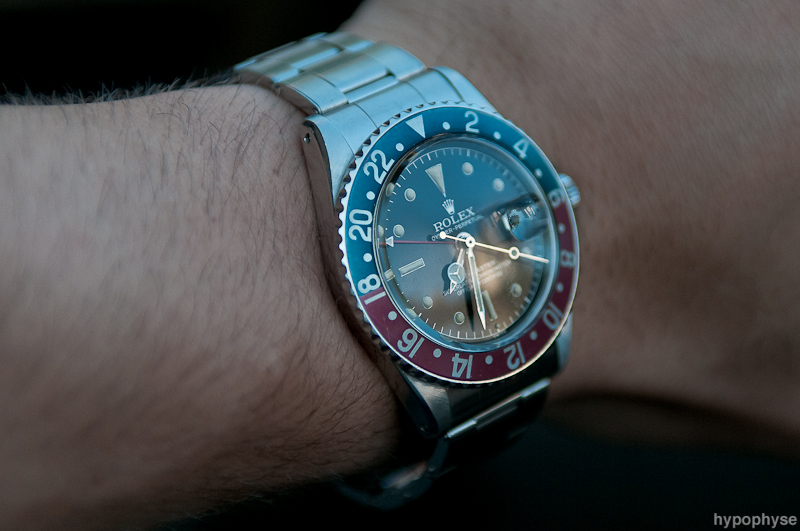
Unlike real estate, cars, furniture, books, carpets, paintings, porcelain, and silverware, luxury wristwatches are highly personalized items that can be worn directly on your body, your wrist, to be more specific, while offering you a personal and sometimes an intimate emotional and sentimental value.
Luxury watches are a unique category unto themselves since they straddle and cross many definitions and genres of products.
Luxury wristwatches are quite possibly the most unique genre of luxury products you can find today on the commercial market.
Back to Table of Contents / Conclusion and Summary of the Ranking: All 50 Brands
Why Even Rank Luxury Watch Brands at all?
All people are created equal in the eyes of God, but all man-made pieces of art, craftsmanship, utilitarian tools, machines, jewelry, and luxury items aren’t created equally.
That’s why I, and many others, both online and offline, rank the luxury watch brands and manufacturers in the world to determine what these luxurious, time-measuring, mechanical, wondrous wrist-worn micro-machines can offer us, based on their merits, qualities, attributes, and price-to-quality ratio.
And this main premise justifies this whole article and all the ranking lists down below.
Back to Table of Contents / Conclusion and Summary of the Ranking: All 50 Brands
The Eight (8) Evaluation Criteria
Each criterion is assigned a percentage weight to reflect its relative importance in the overall brand ranking. These benchmarks aim to move beyond superficial marketing and instead highlight true horological merit.
Criterion 1 • Mechanical Innovation (20%)
Does the brand consistently push the boundaries of watchmaking with new mechanisms, materials, or engineering solutions? This includes complications, escapement systems, anti-magnetic tech, and pioneering calibers.
Criterion 2 • Movement Finishing (15%)
To what degree are the brand’s movements hand-finished and artistically refined? This includes Geneva stripes, anglage, perlage, black polishing, and decorative craftsmanship visible through the case back.
Criterion 3 • Heritage and Brand Legacy (15%)
How long-standing is the brand’s history? Has it contributed to the evolution of horology over generations? This also includes brand continuity, rebirths, or preservation of historical excellence.
Criterion 4 • In-House vs. Outsourced Movements (10%)
Does the brand produce its own movements or rely on third-party calibers? Full vertical integration and in-house movement design are given higher merit.
Criterion 5 • Craftsmanship (15%)
How well are the watches assembled, regulated, and finished? This includes not just movements, but dials, cases, and bracelets—especially in terms of hand-applied detail and quality control.
Criterion 6 • Exclusivity and Volume (10%)
How rare or exclusive are the brand’s offerings? Boutique-only pieces, low production numbers, and high barriers to entry signal prestige, whereas mass production may detract from exclusivity.
Criterion 7 • Design Uniqueness (10%)
Is the brand recognizable by its own visual language? Are its designs original, iconic, or trend-setting? Brands that copy others or rely too much on historical pastiche rank lower.
Criterion 8 • Contributions to Horology (Patents, Inventions) (5%)
Has the brand patented meaningful advancements or historically influenced watchmaking through invention? This includes landmark contributions like the perpetual calendar, tourbillon, or new regulating systems.
Back to Table of Contents / Conclusion and Summary of the Ranking: All 50 Brands
An Overview of the Five (5) Ranking Levels
The ranking list in this 2025 edition is dramatically different from my 2015 article, and if you’re surprised and even shocked at how different the ranking is now, you’re supposed to be.
Let’s now explore the world’s most remarkable luxury watch brands across five distinct tiers. The ranking is done in a descending order, starting with the elite luxury watchmakers in the world, the pinnacle of horology, and ending the list with watchmakers with a lesser impact on horology:
- Level 1: The Elite of Luxury Watchmakers (High Horology Titans)
- Level 2: Independent High Horology Masters
- Level 3: Established and Iconic Luxury Watch Brands
- Level 4: Experimental Luxury Watch Brands
- Level 5: Entry-Level Accessible Luxury Watch Brands
Back to Table of Contents / Conclusion and Summary of the Ranking: All 50 Brands
 A Short Explanation
I’ve created five (5) ranking levels of the top 50 luxury wristwatch brands in the world in a hierarchy that I think reflects the character and nature of the luxury watch industry today.
Down below, you’ll find the particular luxury watchmakers and brands that in my opinion, deserve to be ranked among the top 50 in the world.
But before you jump to conclusions, let’s make one thing very clear: there are literally thousands of watchbrands in existence today and to be ranked among the top 50 luxury watch brands in the world is an immensely impressive achievement that shouldn’t be trivialized.
Back to Table of Contents / Conclusion and Summary of the Ranking: All 50 Brands
Level 1: The Elite of Luxury Watchmakers (High Horology Titans)
Criteria: These are the Heritage Titans. Legacy Maisons with centuries of innovation, institutional continuity, and industry-defining influence. They are to the world of luxury watches what Rolls-Royce is to the world of cars.
They are the elite of the luxury watch industry, Swiss and non-Swiss watchmakers alike. They carry the historical weight and gravitas, the mechanical innovation, patents, technical solutions, high horology, complicated movements, movement finishing, craftsmanship, and artistic prowess of the luxury watch industry on their very wide and respected shoulders.
Back to Table of Contents / Conclusion and Summary of the Ranking: All 50 Brands
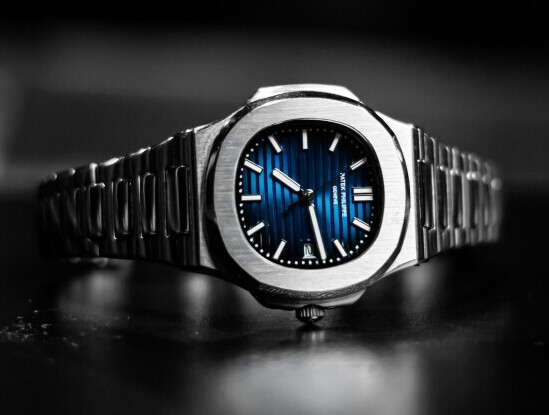
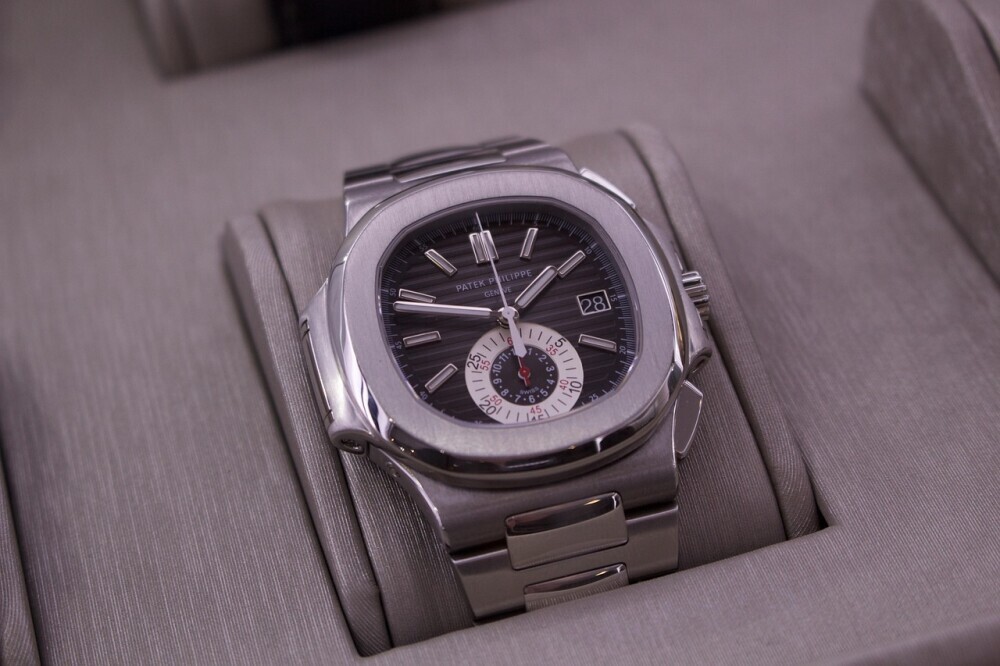
Rank 1. Patek Philippe
Founded: 1839, Switzerland
Founder: Antoine Norbert de Patek, Adrien Philippe
Ownership: Family-owned (Stern family)
Famous for: Perpetual calendars, minute repeaters, Grand Complications, Calatrava
Output: ~60,000 watches/year
Why #1: Patek Philippe won more than 700 timekeeping prizes between 1900 and 1939. Patek Philippe has won more than 300 first prizes until now.
Patek Philippe bears the famous Patek Philippe Seal since 2009, which is a new and unprecedented quality standard for mechanical and automatic timepieces, and this standard goes beyond any of the standards in the Swiss watchmaking industry.
Industry-defining legacy, mechanical innovation, and ultimate resale value. Patek Philippe is a member of the so-called ”Holy Trinity” (the ”Holy Trinity” refers to Patek Philippe, Vacheron Constantin, and Audemars Piguet) of luxury watch brands and is the undisputed monarch of all Swiss and non-Swiss luxury watch manufacturers in the world.
Patek Philippe Official Website
Rank 2. A. Lange & Söhne
Founded: 1845 (re-established 1990), Germany
Founder: Ferdinand Adolph Lange
Ownership: Richemont Group
Famous for: Saxonia, Lange 1, Zeitwerk, 1815
Output: ~5,000 watches/year
Why #2: Masterful German engineering, depth of finishing, and architectural movement design.
A. Lange & Söhne isn’t considered to be a member of the ”Holy Trinity” (the ”Holy Trinity” refers to Patek Philippe, Vacheron Constantin, and Audemars Piguet) but is considered by many a German luxury watch brand that indeed has enough innovative and technological clout, finishing and polishing, and craftsmanship to rival the so-called ”Holy Trinity.”
In my original ranking list from 2015, I ranked A. Lange & Söhne as number 4. In this current ranking list, I’ve placed this iconic watchmaker at position number 2.
A. Lange & Söhne, in my humble opinion, should replace Audemars Piguet as a member of the ”Holy Trinity,” and the iconic German watchmaker from Glashütte, Saxony, is probably the only luxury watch brand and manufacturer in the world comparable to Patek Philippe.
Based on what I’ve observed and researched so far, A. Lange & Söhne is a few notches above Vacheron Constantin and Audemars Piguet in terms of movement finishing, craftsmanship, attention to detail, exclusivity, and volume.
A. Lange & Söhne Official Website
Rank 3. Vacheron Constantin
Founded: 1755, Switzerland
Founder: Jean-Marc Vacheron
Ownership: Richemont Group
Famous for: Overseas, Patrimony, Historiques
Output: ~20,000–25,000 watches/year
Why #3: Oldest continuous watchmaker, exceptional finishing and heritage. Vacheron Constantin is a member of the so-called ”Holy Trinity” (Patek Philippe, Vacheron Constantin, and Audemars Piguet) and has earned its place in this distinguished club of elite luxury watchmakers.
Vacheron Constantin bears the Hallmark of Geneva, which is the highest quality certification a watchmaker can get. Vacheron Constantin is also a master of movement complications, movement decorations and artistic design. Very few luxury watchmakers in the world can compete with Vacheron Constantin in terms of historical age and continuity, innovation, technology, craftsmanship, and artistic prowess. In my original ranking list from 2015, I placed Vacheron Constantin at number 2. In this current ranking list, I place Vacheron Constantin at number 3.
Vacheron Constantin Official Website
Rank 4. Audemars Piguet
Founded: 1875, Switzerland
Founder: Jules Louis Audemars, Edward Auguste Piguet
Ownership: Independent (family-owned)
Famous for: Royal Oak, Royal Oak Offshore, Code 11.59
Output: ~50,000 watches/year
Why #4: Audemars Piguet can boast about being ”the first” at least 18 times between 1892 and 2009 in many mechanical innovations, specifically involving movement complications. Bold design leadership and innovation within independence.
Audemars Piguet is a cherished and loved elite luxury watch brand that is widely considered by many to be a member of the ”Holy Trinity” (Patek Philippe, Vacheron Constantin, and Audemars Piguet), but its current and contemporary lack of innovation and its overreliance on the immensely popular Royal Oak collection make it a rather one-dimensional, rigid brand lacking complexity, depth, breadth, innovation, and versatility.
For this reason, in its current shape and form, Audemars Piguet, in my opinion, should no longer be considered to be a member of the ”Holy Trinity.” Audemars Piguet carries historical gravitas but has fallen from grace lately. In my original ranking list in 2015, I ranked Audemars Piguet as number 3. Now I rank it as number 4 in the world.
Still an elite luxury watchmaker, though, that stands head and shoulders above most of the competition out there.
Audemars Piguet Official Website
Rank 5. Jaeger-LeCoultre
Founded: 1833, Switzerland
Founder: Antoine LeCoultre
Ownership: Richemont Group
Famous for: Reverso, Polaris, Atmos clock
Output: ~90,000 watches/year
Why #5: Movement innovator and manufacturer for other high houses. 1000-hours control pertaining to the accuracy of the movement.
Jaeger-LeCoultre is an elite luxury watchmaker that easily stands head and shoulders above 99.99% of the competition out there. The legendary watchmaker is called the “watchmakers’ watchmaker” for a reason.
Jaeger-LeCoultre should be ranked among the top 5 luxury watch brands in the world due to its innovations in horology, an unrelentingly strict scientific approach, unrelenting quest for craftsmanship and quality, accurate movements, movement complications and mechanical wonders, and the brand’s historical status as a supplier of movements or calibers to highly esteemed luxury watchmakers such as Patek Philippe, Vacheron Constantin, Audemars Piguet, Cartier, and IWC Schaffhausen.
JLC’s finishing, though, may not necessarily be on the same level as the first four (4) brands on this ranking list, hence its position as number 5.
Jaeger-LeCoultre Official Website
Rank 6. Breguet
Founded: 1775, France/Switzerland
Founder: Abraham-Louis Breguet
Ownership: Swatch Group
Famous for: Tourbillon, Marine, Classique, Tradition
Output: ~15,000 watches/year
Why #6: Father of the tourbillon, legacy-rich, distinct DNA.
Rank 7. Blancpain
Founded: 1735, Switzerland
Founder: Jehan-Jacques Blancpain
Ownership: Swatch Group
Famous for: Fifty Fathoms, Villeret, Carrousel complications
Output: ~30,000–35,000 watches/year
Why #7: No quartz ever; purity of mechanical watchmaking. Invented the first modern diver’s watch, meaning the iconic Blancpain Fifty Fathoms. Blancpain watches are handmade by a single watchmaker from start to finish, blending traditional handcraft with modern tech, and they specialize in complex, high-end watchmaking with intricate complications like tourbillons, perpetual calendars, and minute repeaters.
Level 2: Independent High Horology Masters
Criteria: Boutique visionaries pushing boundaries in finishing, architecture, and creative independence. These are the most ”niche” luxury watchmakers in the world you can think of.
In some specific aspects, the independent high horology masters are as innovative, creative, and artistically excellent as the top 7 brands in Level 1 and might even surpass the top 7 luxury watch brands in some key vital areas.
However, they fall short compared to the top 7 luxury watch brands in terms of historical weight and gravitas, patents, and innovation.
The independent high horology masters haven’t got the same number of patents or revolutionary technical and mechanical innovations under their belt as the top 7 brands.
They are refining and improving the watchmaking skills of the top 7 luxury watch brands, rather than bringing new revolutionary technology to the world of luxury watches.
For these reasons, the independent high horology masters end up in Level 2.
They are, however, still very much elite luxury watchmakers that would easily outcompete most, if not all, of the biggest commercial-industrial giants and household names in the luxury watch industry in terms of high horology, mechanical innovation, and movement finishing.
Back to Table of Contents / Conclusion and Summary of the Ranking: All 50 Brands
Rank 8. F.P. Journe
Founded: 1999, Switzerland
Founder: François-Paul Journe
Ownership: Independent
Country: Switzerland
Output: ~900–1,000 watches/year
Famous for: Chronomètre à Résonance, Tourbillon Souverain, Octa series
Why Ranked Here: F.P. Journe is often called the “thinking collector’s watchmaker.” His movements are fully in-house, constructed in gold, and boast original complications like the remontoir d’égalité and resonance mechanisms. Unique aesthetics, intellectual purity, and innovation define the brand.
Rank 9. Greubel Forsey
Founded: 2004, Switzerland
Founders: Robert Greubel & Stephen Forsey
Ownership: Independent
Country: Switzerland
Output: ~100 watches/year
Famous for: Inclined tourbillons, Double Tourbillon 30°, GMT Earth
Why Ranked Here: The pinnacle of ultra-high-end movement architecture and finishing. Greubel Forsey pieces are micro-sculptures of kinetic horological art, with finishing so meticulous it surpasses most museum-level craftsmanship.
Greubel Forsey Official Website
Rank 10. Philippe Dufour
Founded: 1992 (as an independent brand), Switzerland
Founder: Philippe Dufour
Ownership: Independent
Country: Switzerland
Output: ~15–20 watches/year
Famous for: Simplicity, Duality, Grande Sonnerie
Why Ranked Here: Often cited as the greatest living watchmaker. Each Dufour timepiece is entirely hand-finished and assembled by the man himself. The benchmark for true artisanal excellence.
This video is the property of Christie’s YouTube Channel.
Philippe Dufour Official Website
Rank 11. Kari Voutilainen
Founded: 2002, Switzerland
Founder: Kari Voutilainen (Finnish)
Ownership: Independent
Country: Switzerland
Output: ~50–70 watches/year
Famous for: Scintillating guilloché dials, Vingt-8 caliber
Why Ranked Here: Peerless dial artistry and hand-finishing. Voutilainen blends classical aesthetics with ultra-refined movement construction. Revered in collector circles for his balance of beauty and engineering.
This video is the property of GMT Italy YouTube Channel.
Kari Voutilainen Official Website
Rank 12. Romain Gauthier
Founded: 2005, Switzerland
Founder: Romain Gauthier
Ownership: Independent
Country: Switzerland
Output: ~60–100 watches/year
Famous for: Logical One, Insight Micro-Rotor
Why Ranked Here: Mechanical elegance and unconventional engineering define the brand. The winding systems and gear train layout are designed with mathematical precision, and every surface is finished to the highest haute horlogerie standards.
This video is the property of The 1916 Company Watch Reviews YouTube Channel.
Romain Gauthier Official Website
Rank 13. Laurent Ferrier
Founded: 2010, Switzerland
Founder: Laurent Ferrier
Ownership: Independent
Country: Switzerland
Output: ~150–200 watches/year
Famous for: Galet Micro-Rotor, tourbillons with natural escapement
Why Ranked Here: Known for understated elegance, Ferrier watches deliver long power reserves, quiet design brilliance, and beautifully executed movements.
This video is the property of the Revolution Watch YouTube Channel.
Laurent Ferrier Official Website
Rank 14. Parmigiani Fleurier
Founded: 1996, Switzerland
Founder: Michel Parmigiani
Ownership: Sandoz Family Foundation (quasi-independent)
Country: Switzerland
Output: ~5,000–6,000 watches/year
Famous for: Tonda PF, Toric, restoration background
Why Ranked Here: A vertically integrated powerhouse with movement manufacture and dial production in-house. Impressive finishing and complication execution, rooted in watch restoration mastery.
This video is the property of the LUXE.TV YouTube Channel.
Parmigiani Fleurier Official Website
Rank 15. Christophe Claret
Founded: 1989 (brand est. 2009), Switzerland
Founder: Christophe Claret
Ownership: Independent
Country: Switzerland
Output: ~420–450 watches/year
Famous for: Gaming watches, minute repeaters, dual tourbillons
Why Ranked Here: Technical wizardry meets playful genius. Musical watches, roulette dials, and wild complications define Claret’s provocative, high-horology niche.
This video is the property of The Limited Edition YouTube channel.
Christophe Claret Official Website
Rank 16. Lang & Heyne
Founded: 2001, Germany
Founder: Marco Lang
Ownership: Independent
Country: Germany
Output: ~50 watches/year
Famous for: Augustus, Friedrich III, handmade calibers
Why Ranked Here: Artisanal Saxon craftsmanship, with movements designed and finished entirely by hand in Dresden. Regal, baroque designs executed with microscopic precision.
Rank 17. Moritz Grossmann
Founded: 2008, Germany
Founder: Christine Hutter
Ownership: Independent
Country: Germany
Output: ~200 watches/year
Famous for: Benu, Hamatic, manual-wind calibers
Why Ranked Here: A modern take on Glashütte tradition. Stunning finishing, creative winding systems, and rare handmade components define this neo-classical Saxon brand.
Moritz Grossmann Official Website
Level 3: Established and Iconic Luxury Watch Brands
Criteria: Brand equity, historical significance, reliability, broad collections, moderate to high complexity.
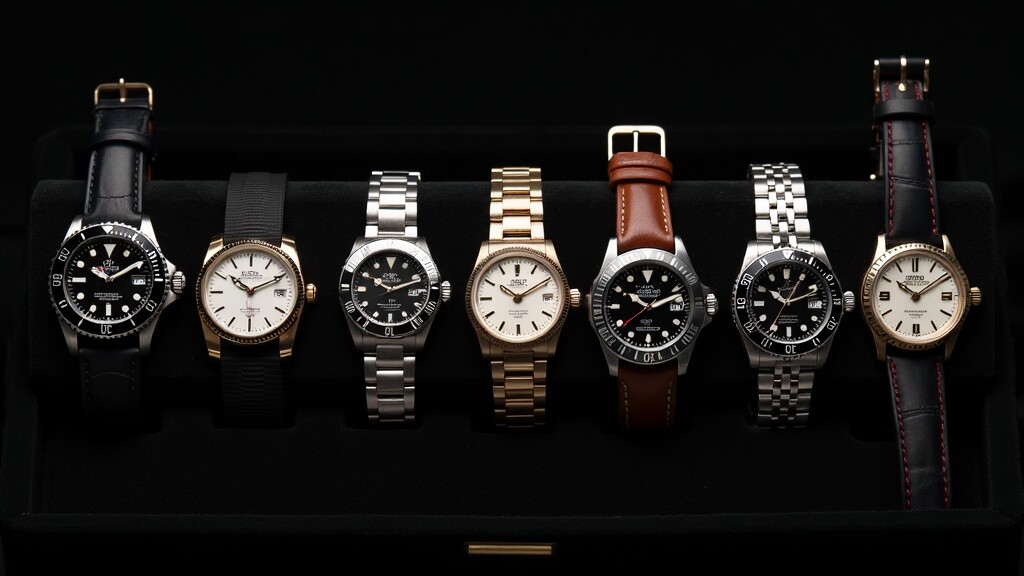
These are the famous commercial-industrial giants and household names in the luxury watch industry that are usually quite commonly seen in luxury watch boutiques across the world.
These are the luxury watch brands most people have heard of. They are less ”niche” than Level 1 and Level 2, and more mainstream in character.
Back to Table of Contents / Conclusion and Summary of the Ranking: All 50 Brands
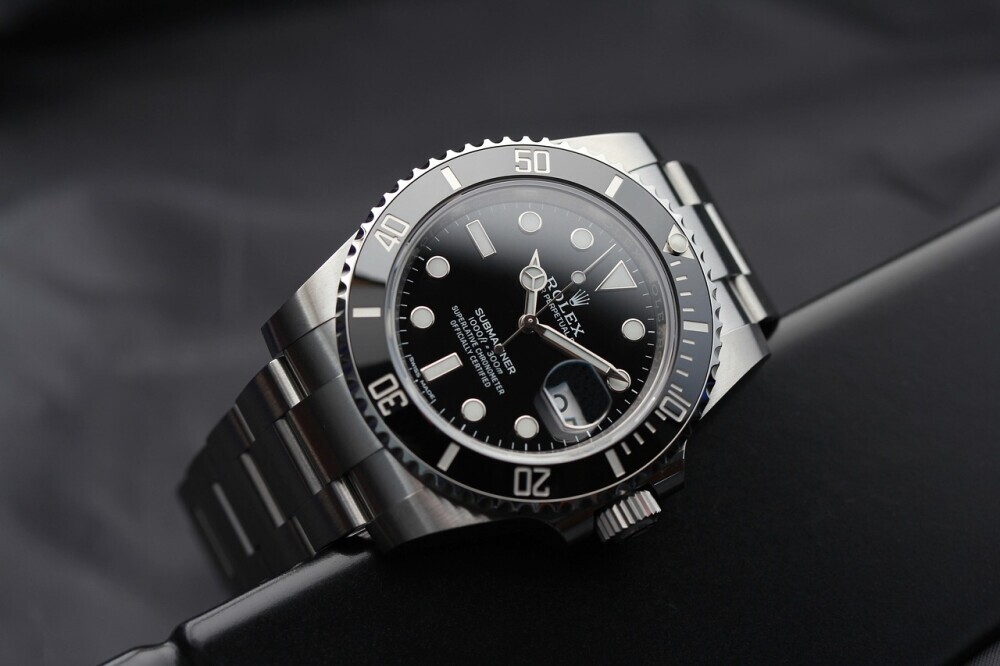
Rank 18. Rolex
Founded: 1905, UK/Switzerland
Founder: Hans Wilsdorf
Ownership: Hans Wilsdorf Foundation (Independent)
Output: ~1,200,000 watches/year
Known for: Submariner, Daytona, Datejust, Oyster case, Perpetual rotor
Profile: The most recognized luxury brand in the world. Not haute horlogerie, but the benchmark for reliability, prestige, and resale. Almost entirely vertically integrated.
Why: Ubiquitous for a reason—unsurpassed reliability, finishing consistency, in-house movements, and robust vertical integration. The perpetual rotor, the first water-resistant watch, the screw-down crown, the date-window function, the GMT movement, and the anti-magnetic movement.
Rolex is, for lack of a better word, the undisputed king of all brands specialized in steel sports watches and the undisputed king of all luxury watch brands in terms of fame, reputation, status, prestige, customer perception, and impact on culture, and history.
Rolex and Patek Philippe are the two brands that hold their resale value the best.
Why place Rolex in Level 3 and not in Level 1?
Rolex’s fame alone makes it a Level 1 luxury watch brand, but due to
- Rolex’s lack of high horology
- almost non-existent movement finishing
- basically non-existent movement complications
- craftsmanship that is clearly several notches below the top 7 luxury watch brands of Level 1
- almost 100% industrial and standardized mass production
- essentially no artisanal aspects or personal creativity from individual watchmakers
- very limited handmade manufacture except for the assembly of the movement and the dial
I have no other choice but to place Rolex firmly in Level 3 in the larger scheme of things.
However, given the brand’s global fame, Rolex has been an almost unmatched status symbol since the 1950s and the 1960s among the rich, wealthy, successful, and powerful. Its mythical fame and reputation reached stratospheric levels in the 1980s.
In popular culture, Rolex is associated with both the literary and cinematic versions of Ian Fleming’s James Bond.
Rank 19. Omega
Founded: 1848, Switzerland
Founder: Louis Brandt
Ownership: Swatch Group
Output: ~600,000–700,000 watches/year
Known for: Speedmaster, Seamaster, Co-Axial escapement
Profile: Technical innovation meets broad appeal. Official NASA timekeeper, Olympic sponsor, and Co-Axial technology pioneer.
Why: Space heritage, METAS-certified accuracy, co-axial escapement innovation, and historically important collections like the Speedmaster and Seamaster. The iconic landing by NASA on the Moon in July 1969 using the iconic Omega Speedmaster Professional.
In popular culture, Omega is associated with the cinematic version of Ian Fleming’s James Bond.
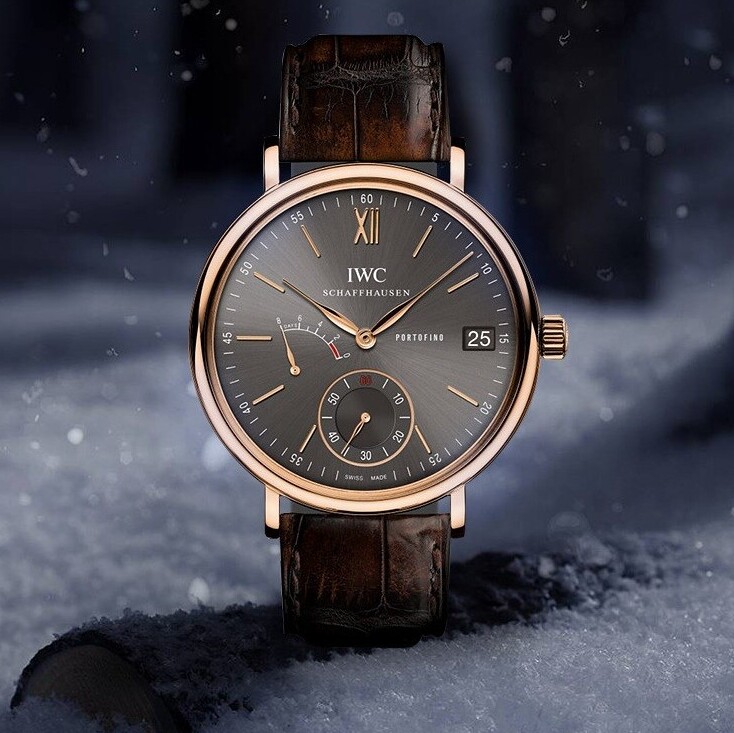
Rank 20. IWC Schaffhausen
Founded: 1868, Switzerland
Founder: Florentine Ariosto Jones
Ownership: Richemont Group
Output: ~70,000–90,000 watches/year
Known for: Portugieser, Big Pilot, Aquatimer
Profile: Industrial elegance and rugged refinement with Germanic roots in a Swiss setting. Excellent complications, clear design DNA.
Why: Aviation heritage, distinctive design language, solid movement architecture, and a balance between technical and elegant.
IWC Schaffhausen Official Website
Rank 21. Zenith
Founded: 1865, Switzerland
Founder: Georges Favre-Jacot
Ownership: LVMH Group
Output: ~20,000–25,000 watches/year
Known for: El Primero, Chronomaster
Profile: Legendary chronograph performance with the El Primero caliber. Understated legacy with serious technical chops.
Why: Creator of the legendary El Primero chronograph movement, with a strong revival in finishing and design direction in recent years.

Rank 22. Ulysse Nardin
Founded: 1846, Switzerland
Founder: Ulysse Nardin
Ownership: Kering Group
Output: ~30,000 watches/year
Known for: Marine Chronometers, Freak, Anchor Escapement
Profile: From nautical roots to radical innovation. Known for silicon technology and daring complications.
Why: Marine chronometer legacy, silicon escapement pioneer, and technical creativity across dive and dress lines.

Ulysse Nardin Official Website
Rank 23. Piaget
Founded: 1874, Switzerland
Founder: Georges Piaget
Ownership: Richemont Group
Output: ~25,000 watches/year
Known for: Altiplano, ultra-thin calibers, high-jewelry timepieces
Profile: Ultra-thin movement specialist blending horology with haute joaillerie (jewelry) elegance.
Why: Ultra-thin movement innovation, in-house jewel setting, and exceptional marriage of horology and haute joaillerie (high jewelry).

Rank 24. Girard-Perregaux
Founded: 1791, Switzerland
Founder: Jean-François Bautte
Ownership: Sowind Group (subsidiary of Kering)
Output: ~12,000–15,000 watches/year
Known for: Tourbillon with Three Bridges, Laureato
Profile: Classical elegance and innovation since the Enlightenment; underappreciated depth.
Why: Tourbillon with three gold bridges, continuous manufacture status, and a classic-meets-contemporary evolution.

Girard-Perregaux Official Website
Rank 25. Glashütte Original
Founded: 1845 (modern form since 1994), Germany
Founder: Ferdinand Adolph Lange (root lineage)
Ownership: Swatch Group
Output: ~10,000–12,000 watches/year
Known for: Senator, PanoMatic series, German silver plates
Profile: Saxon manufacture with strong in-house capabilities and rigorous finishing tradition.
Why: Saxon horology with modern flair, in-house movements, and authentic Germanic craftsmanship.

Glashütte Original Official Website
Rank 26. Chopard L.U.C
Founded: 1860, Switzerland
Founder: Louis-Ulysse Chopard
Ownership: Independent, Scheufele family
Output: ~5,000–6,000 L.U.C units/year
Known for: L.U.C Chronometers, high-end Geneva Seal movements
Profile: The L.U.C line represents Chopard’s pinnacle in in-house manufacturing and finishing. Often underestimated.
Why: Often underrated—L.U.C is true haute horlogerie with Geneva Seal calibers and vertical integration.
Chopard L.U.C Official Website
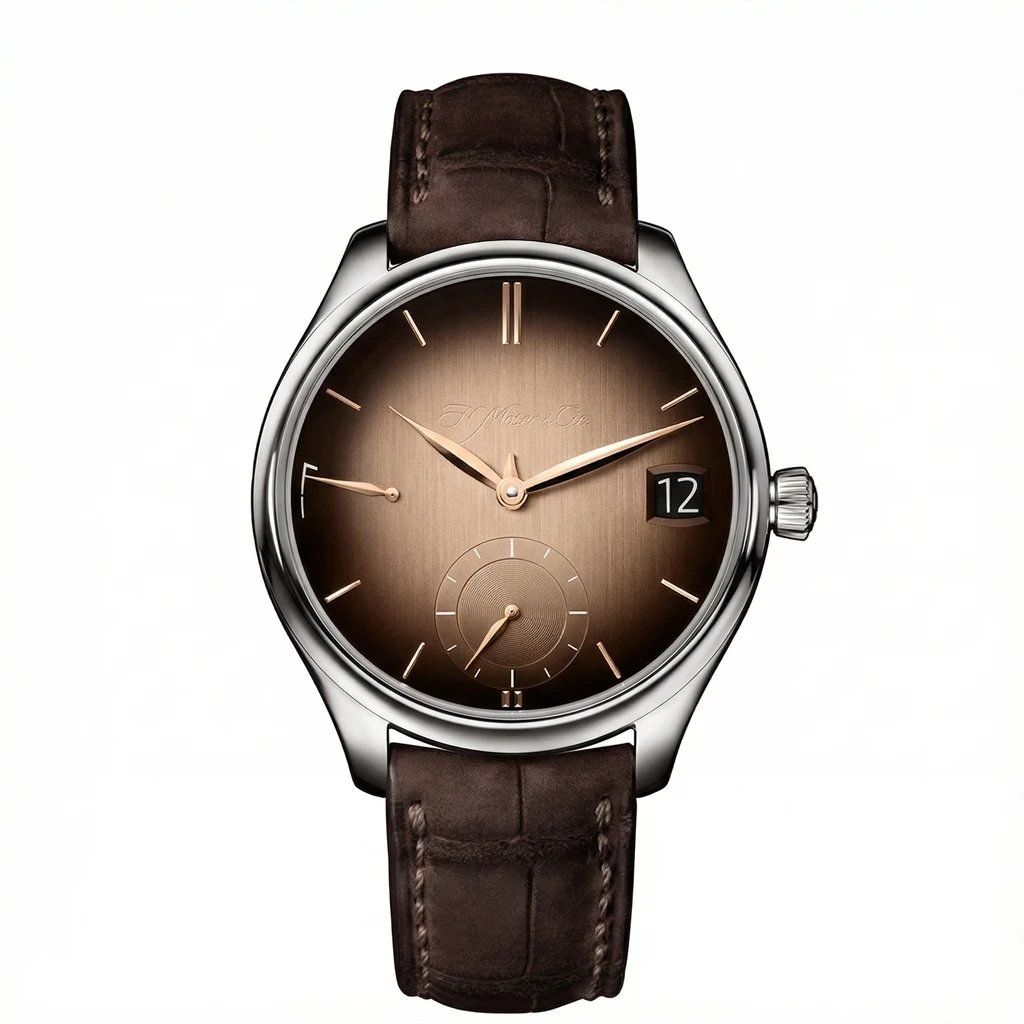
Rank 27. H. Moser & Cie
Founded: 1828 (re-established 2002), Switzerland
Founder: Heinrich Moser
Ownership: MELB Holding (independent)
Output: ~3,000–3,500 watches/year
Known for: Funky Blue fumé dials, Perpetual Calendar, in-house escapement
Profile: Independent rebel with serious movement making, original identity, and a sense of wit.
Why: Playfully contrarian independent with high-end finishing, technical elegance, and anti-establishment creativity.
H. Moser & Cie Official Website
Rank 28. Bovet Fleurier
Founded: 1822, Switzerland
Founder: Édouard Bovet
Ownership: Independent (Pascal Raffy)
Output: ~2,000–3,000 watches/year
Known for: Amadeo case, Fleurier dials, bespoke complications
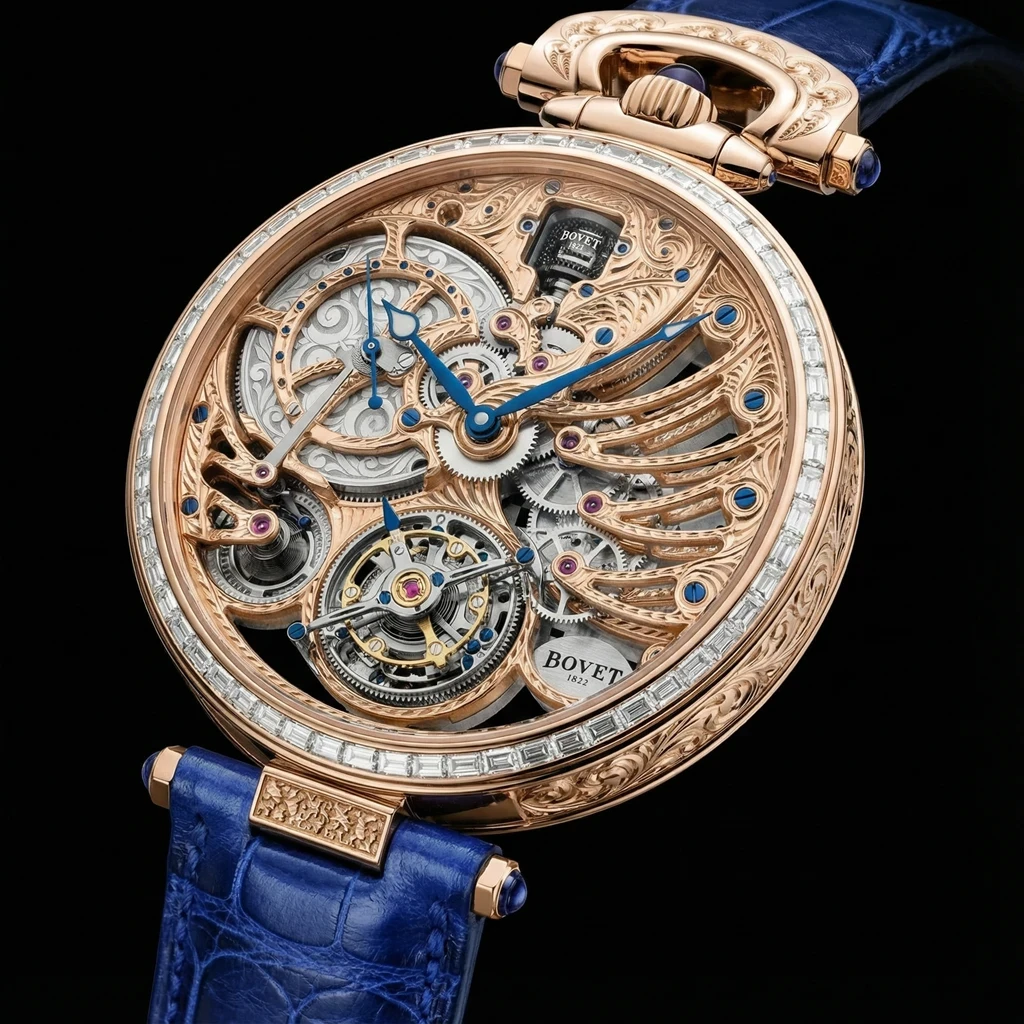
Profile: Baroque artistry meets complex haute horlogerie with unparalleled handcrafting.
Why: Decorative mastery, hand-finished cases and dials, convertible timepieces, and poetic complications. Bovet dazzles the eye and heart, but falls slightly short of the brain and hand of the top-tier mechanical masterminds of the Level 1 luxury watch brands.
It is a luxury horological jeweler with strong artisanal credentials, but not quite a titan of technical innovation across its entire lineup.
In terms of artistic finishing and emotional visual impact, Bovet can indeed rival or even surpass some Tier 1 brands. That would include its extraordinary hand-engraving, miniature painting, decorative dials, and poetic aesthetics.
Bovet Fleurier Official Website
Rank 29. Arnold & Son
Founded: 1764 (re-established 1995), United Kingdom/Switzerland
Founder: John Arnold
Ownership: Citizen Group (Japan)
Famous for: Nebula, Time Pyramid, Luna Magna, Constant-Force Tourbillon
Output: ~1,000–1,500 watches/year
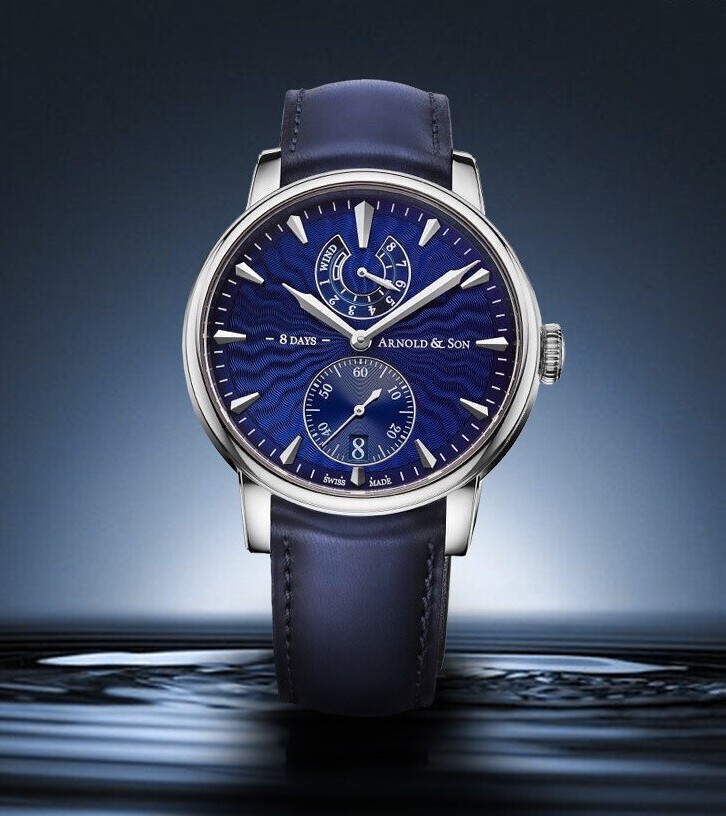
Why: Arnold & Son masterfully merges British marine chronometer heritage with Swiss avant-garde mechanics. Known for symmetry, openworked movement architecture, and complications like double tourbillons and moon phases, they are an underappreciated innovator. While owned by Citizen, they operate independently at La Joux-Perret, delivering rare artistic and mechanical ingenuity.
Rank 30. Roger Dubuis
Founded: 1995, Switzerland
Founder: Roger Dubuis
Ownership: Richemont Group
Famous for: Excalibur, Velvet, Knights of the Round Table, Astral Skeleton
Output: ~4,000–5,000 watches/year
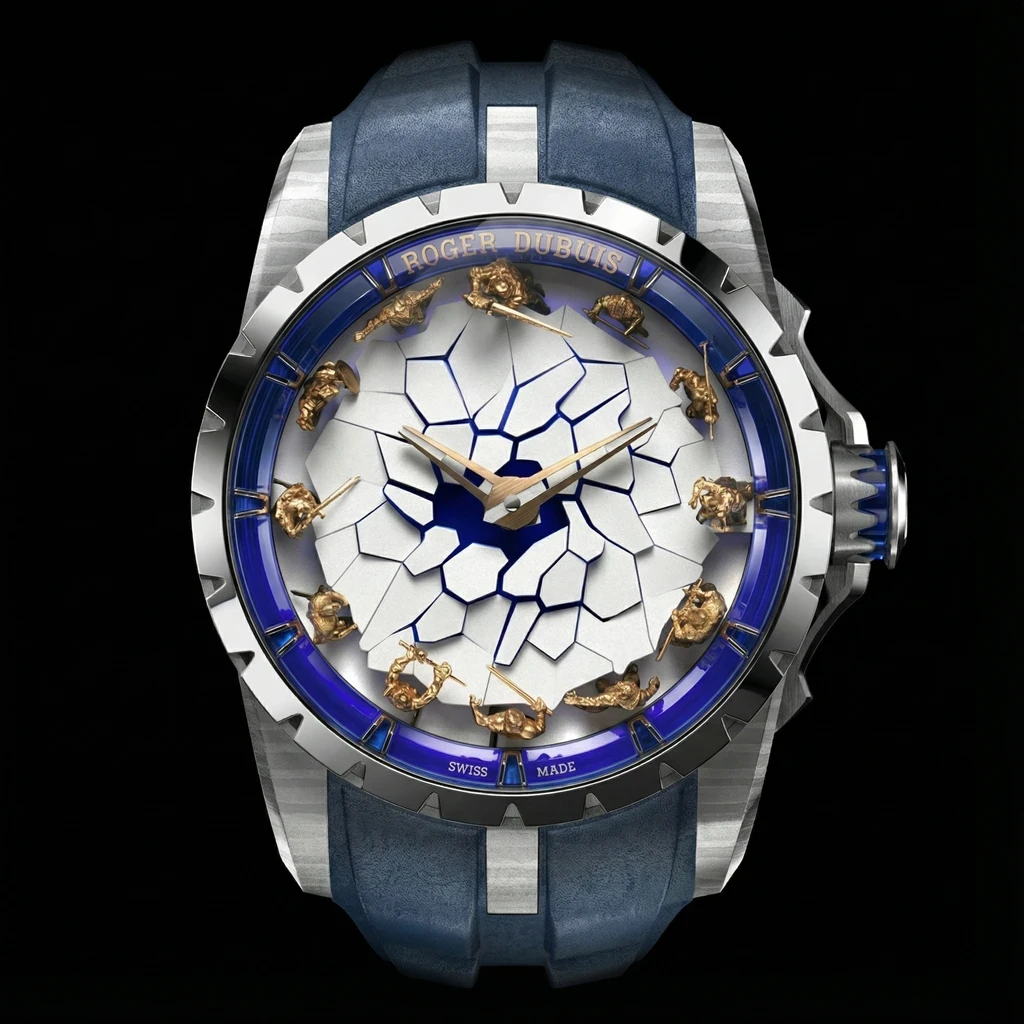
Why: Roger Dubuis represents haute horlogerie theatrics—bold design, skeletonized architecture, and the Geneva Seal on most movements. While their styling is divisive, their finishing and mechanical construction are undeniably high-end. Their blend of complication mastery and extreme design earns them a niche between traditional prestige and expressive horological futurism.
Rank 31. Breitling
Founded: 1884, Switzerland
Founder: Léon Breitling
Ownership: Independent (Partners Group, CVC Capital Partners and Schneider family)
Output: ~200,000 watches/year
Known for: Navitimer, Chronomat, aviation heritage
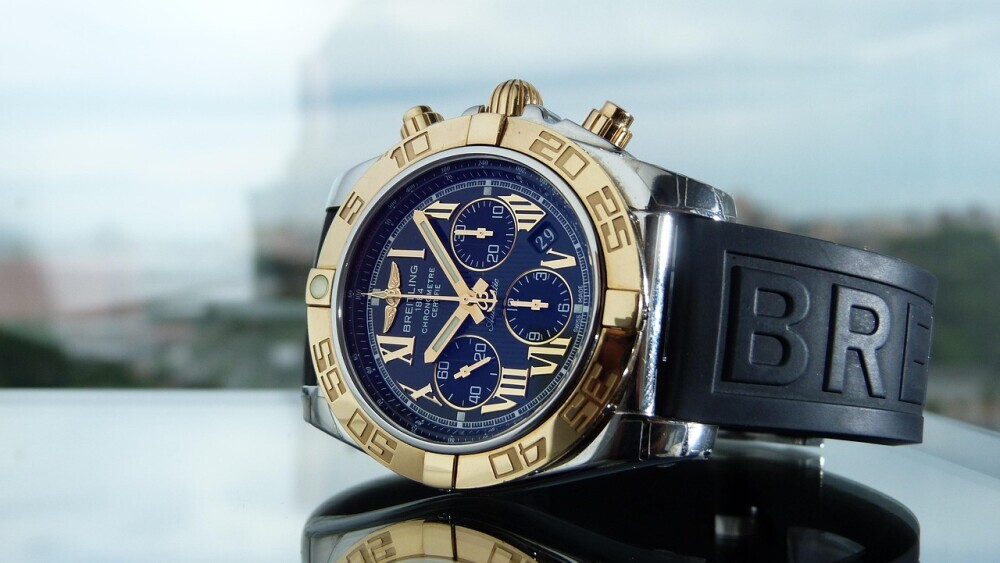
Profile: Aeronautical identity, rugged chronographs; less refined but deeply iconic.
Why: Historically known for aviation chronographs, now returning to in-house movement credibility through the B01 and heritage revivals.
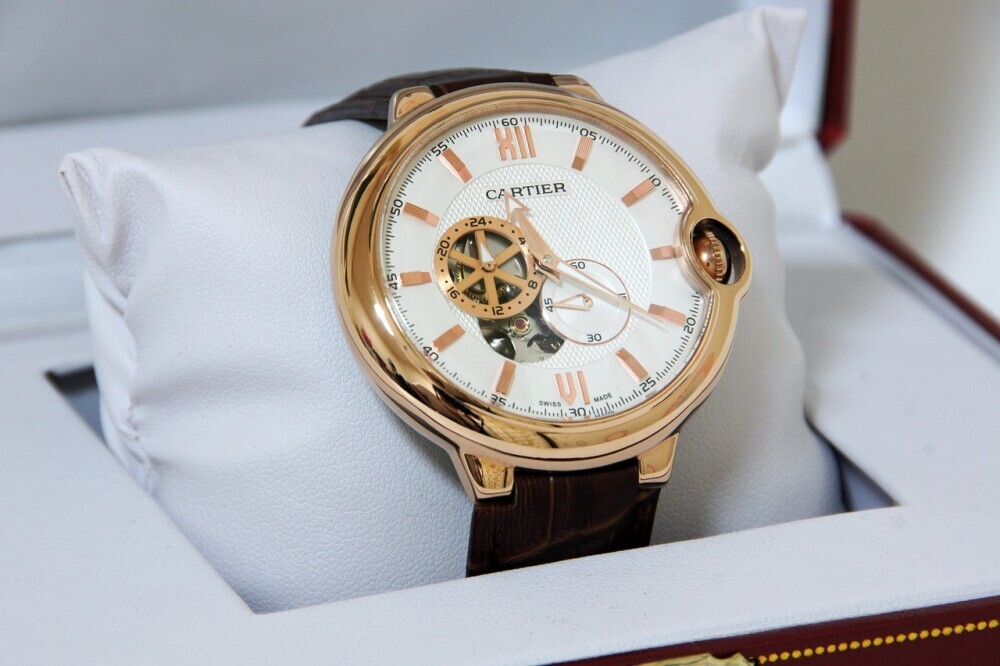
Rank 32. Cartier
Founded: 1847, France (Swiss-made today)
Founder: Louis-François Cartier
Ownership: Richemont Group
Output: ~500,000 watches/year
Known for: Tank, Santos, Ballon Bleu
Profile: The “jeweler of kings” and watch design master. Iconic cases, legendary cultural cachet.
Why: The jeweller of kings, Cartier brings legendary case design and increasing mechanical credibility via the CPCP (Collection Privée Cartier Paris) and Fine Watchmaking collection.
Rank 33. Richard Mille
Founded: 2001, Switzerland
Founder: Richard Mille
Ownership: Independent
Output: ~5,000–6,000 watches/year
Known for: RM 027, RM 11, high-tech materials
Profile: Hyper-luxury engineering marvels with F1 and aerospace inspiration. Avant-garde status symbol.
Why: Ultra-light, shock-resistant, high-tech luxury—extreme engineering paired with eye-watering price and exclusivity.

Richard Mille Official Website
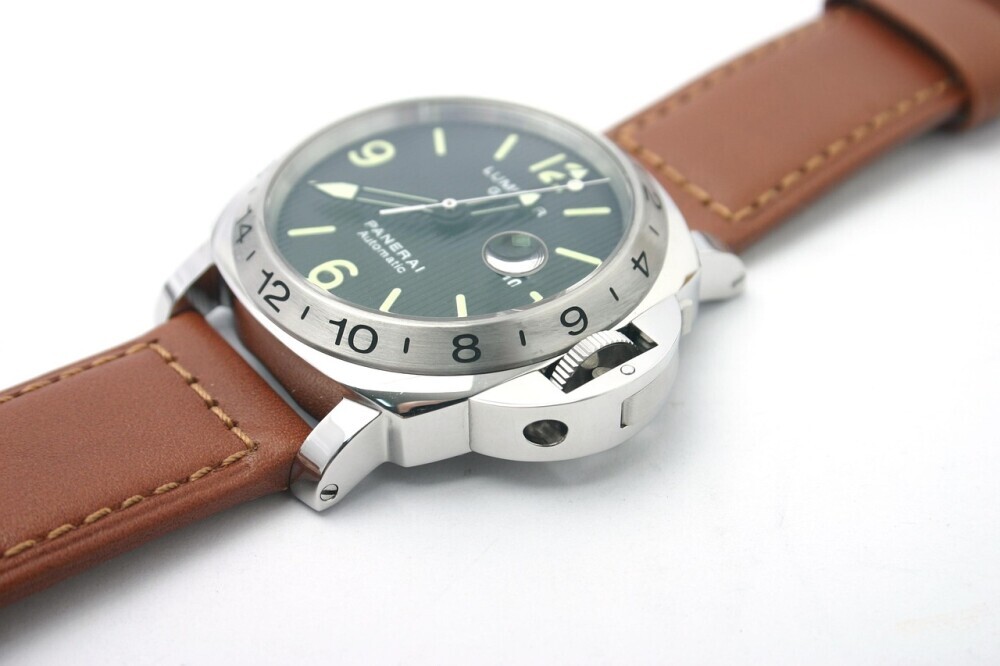
Rank 34. Panerai
Founded: 1860, Italy (Swiss-based and Swiss-made today)
Founder: Giovanni Panerai
Ownership: Richemont Group
Output: ~70,000–80,000 watches/year
Known for: Luminor, Radiomir and Submersible
Profile: Italian military heritage and bold cushion-case identity. Large, simple, iconic.
Why: Italian design with military origins, unmistakable silhouette, and increased in-house caliber development.
Rank 35. Grand Seiko
Founded: 1960, Japan
Founder: Kintaro Hattori
Ownership: Seiko Group (autonomous subsidiary)
Output: ~35,000–50,000 watches/year
Known for: Spring Drive, Zaratsu polishing, snowflake dials
Profile: Japanese excellence in accuracy, finishing, and innovation. Quietly competing with Swiss legendary brands such as Rolex and Omega.
Why: Spring Drive, Zaratsu polishing, hand-finished dials—Japanese artistry with mechanical and hybrid precision.

Rank 36. Tudor
Founded: 1926, Switzerland
Founder: Hans Wilsdorf
Ownership: Rolex SA (sister brand)
Output: ~300,000–400,000 watches/year
Known for: Black Bay, Pelagos, in-house calibers
Profile: The “poor man’s Rolex.” Robust, handsome, value-driven luxury tool watches.
Why: Rolex’s sister brand with unique identity, robust value proposition, and revived historical designs and in-house movements.
.jpg/960px-Tudor_North_Flag_watch_(27736139854).jpg?20180210191250)
Rank 37. Hublot
Founded: 1980, Switzerland
Founder: Carlo Crocco
Ownership: LVMH Group
Output: ~50,000–60,000 watches/year
Known for: Big Bang, fusion materials
Profile: Bold, controversial, and polarizing. Technical experimentation meets lifestyle branding.
Why: Fusion aesthetics, aggressive design, and large-scale presence; some manufacture innovation though mostly marketing driven.
From the point of view of pure horology, Hublot is the least solid brand among Level 3 luxury watch manufacturers owing to Hublot’s overreliance on fame, customer perception, and exorbitant prices.

Level 4: Experimental Luxury Watch Brands
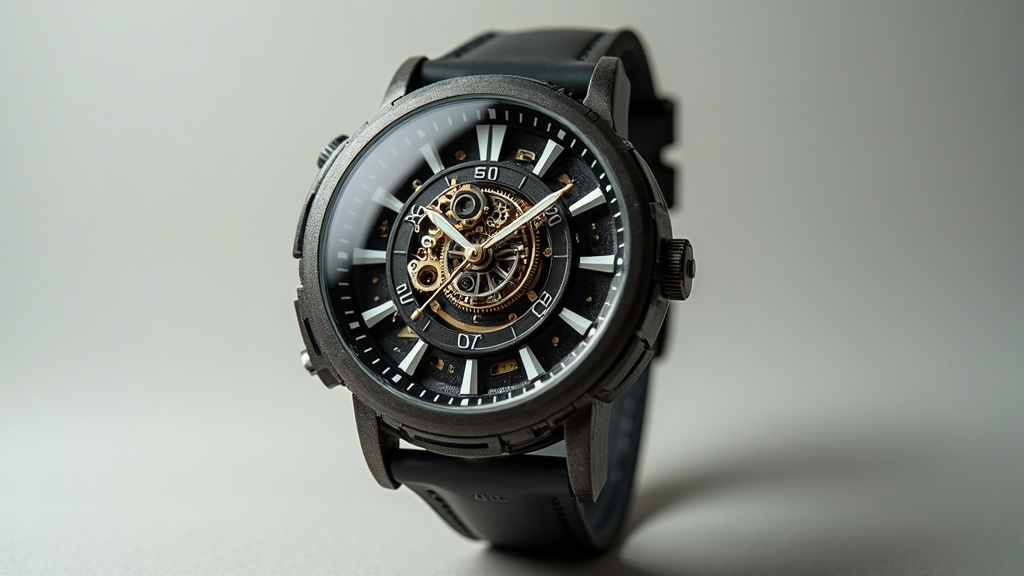
Criteria: They are exactly what they sound like: they are experimental brands, and they like to do things differently for the sake of it and question very often the rigid assumptions of what a luxury watch ”should” look like, how it ”should” function, how it ”should” be built, and what materials ”should” be used to manufacture and assemble a luxury wristwatch. The dials, materials, and movements differ from traditional watchmaking.
The main selling points of the experimental luxury watch brands in Level 4 are in-house production, craftsmanship, exclusivity and volume, and design uniqueness.
However, mechanical innovation, movement finishing, craftsmanship, and contributions to horology still aren’t comparable to luxury watch brands and manufacturers of Levels 1, 2, and 3.
In addition, their lack of historical clout (heritage and brand legacy) means they end up in category Level 4.
They are, however, still considered by many to be luxury wristwatches, and they aren’t entry-level luxury watches, neither in price range nor in mechanical and technological character and execution.
Back to Table of Contents / Conclusion and Summary of the Ranking: All 50 Brands
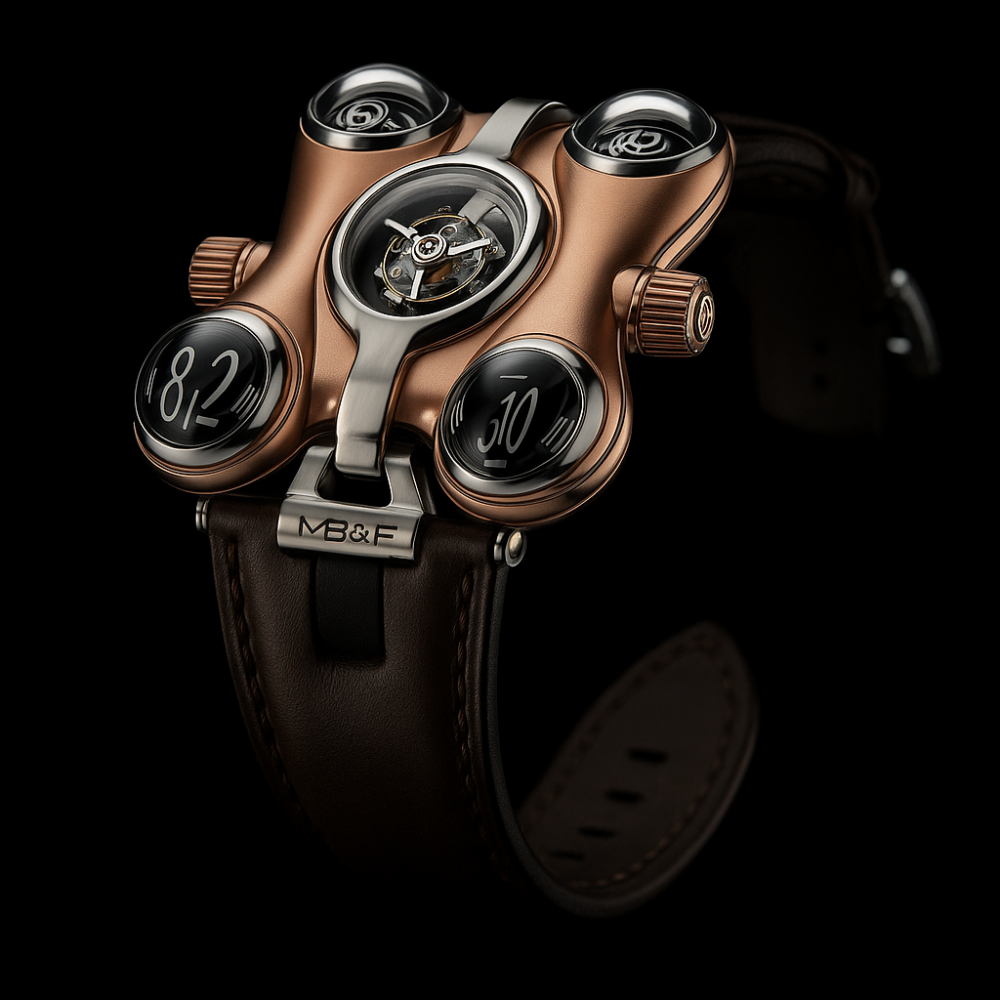
Rank 38. MB&F (Maximilian Büsser & Friends)
Founded: 2005, Switzerland
Founder: Maximilian Büsser
Ownership: Independent
Output: ~250–300 watches/year
Famous for: Horological Machines, Legacy Machines
Why here: MB&F redefines watchmaking as kinetic sculpture. Each piece is a mechanical alien — unapologetically bold and radically different.
Maximilian Büsser & Friends Official Website
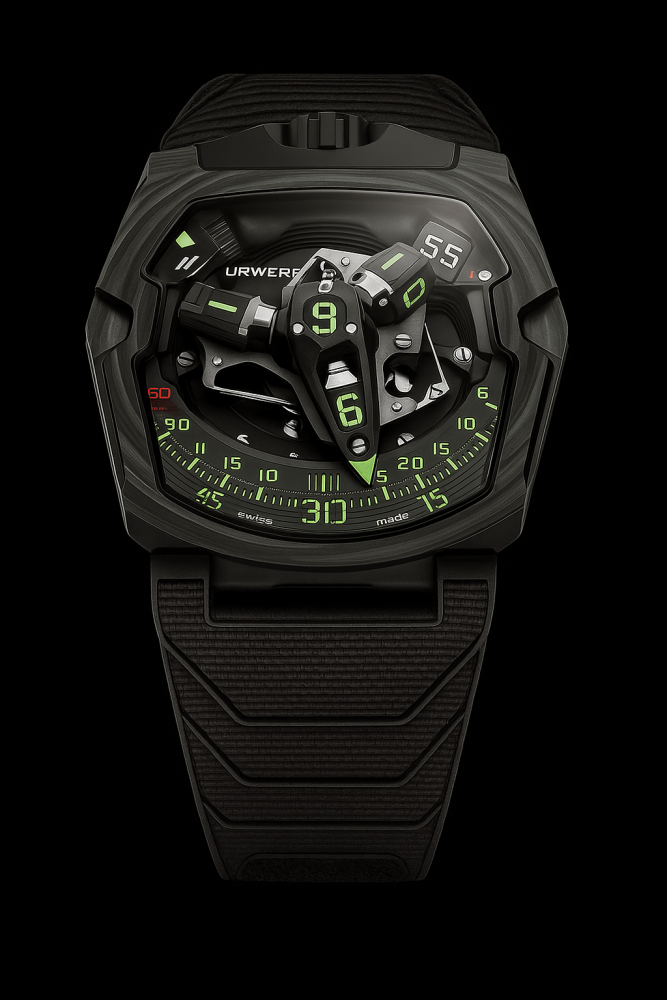
Rank 39. Urwerk
Founded: 1997, Switzerland
Founders: Felix Baumgartner, Martin Frei
Ownership: Independent
Output: ~150 watches/year
Famous for: Satellite time displays, UR-series
Why here: Pioneers in alternative time indication. Technological artwork for the wrist.
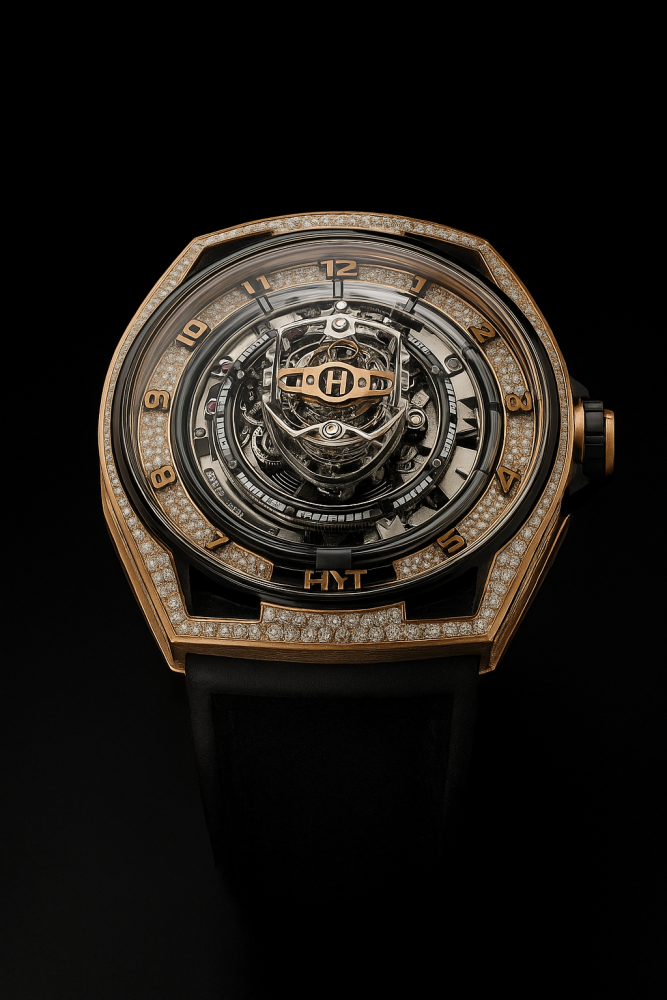
Rank 40. HYT (Hydro Mechanical Horologists)
Founded: 2012, Switzerland
Founder: Lucien Vouillamoz & Vincent Perriard
Ownership: Independent
Output: ~200–300 watches/year
Famous for: Hydro-mechanical timepieces
Why here: Watches that use fluid mechanics to tell time — a horological revolution.
Hydro Mechanical Horologists Official Website
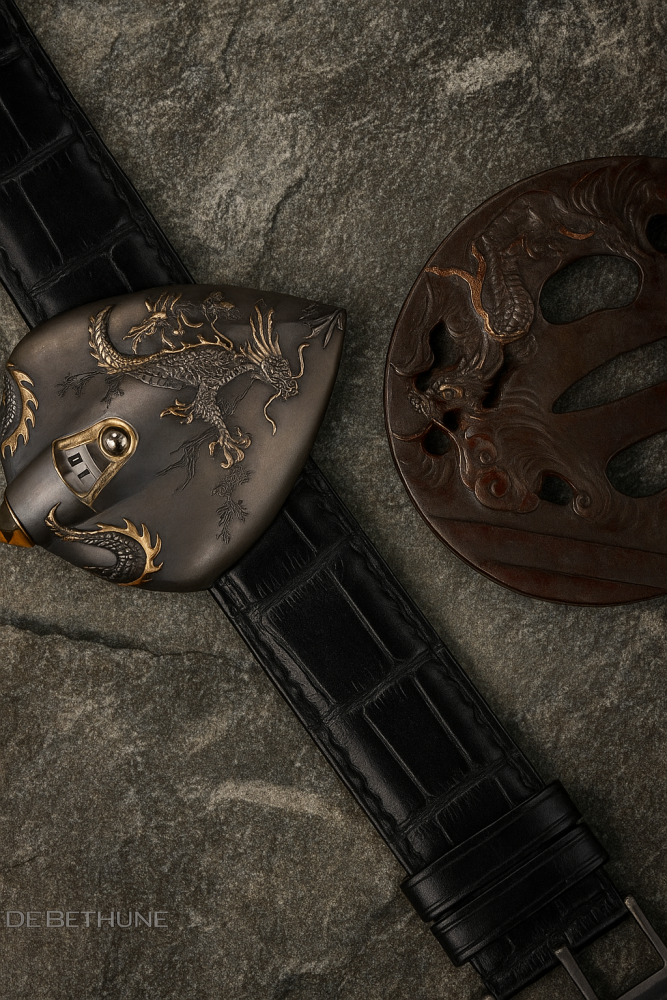
Rank 41. De Bethune
Founded: 2002, Switzerland
Founders: David Zanetta, Denis Flageollet
Ownership: Independent
Output: ~250 watches/year
Famous for: DB28, starlit dials, delta bridges
Why here: Master finishing, artistic sci-fi aesthetics, and cutting-edge escapement innovation.
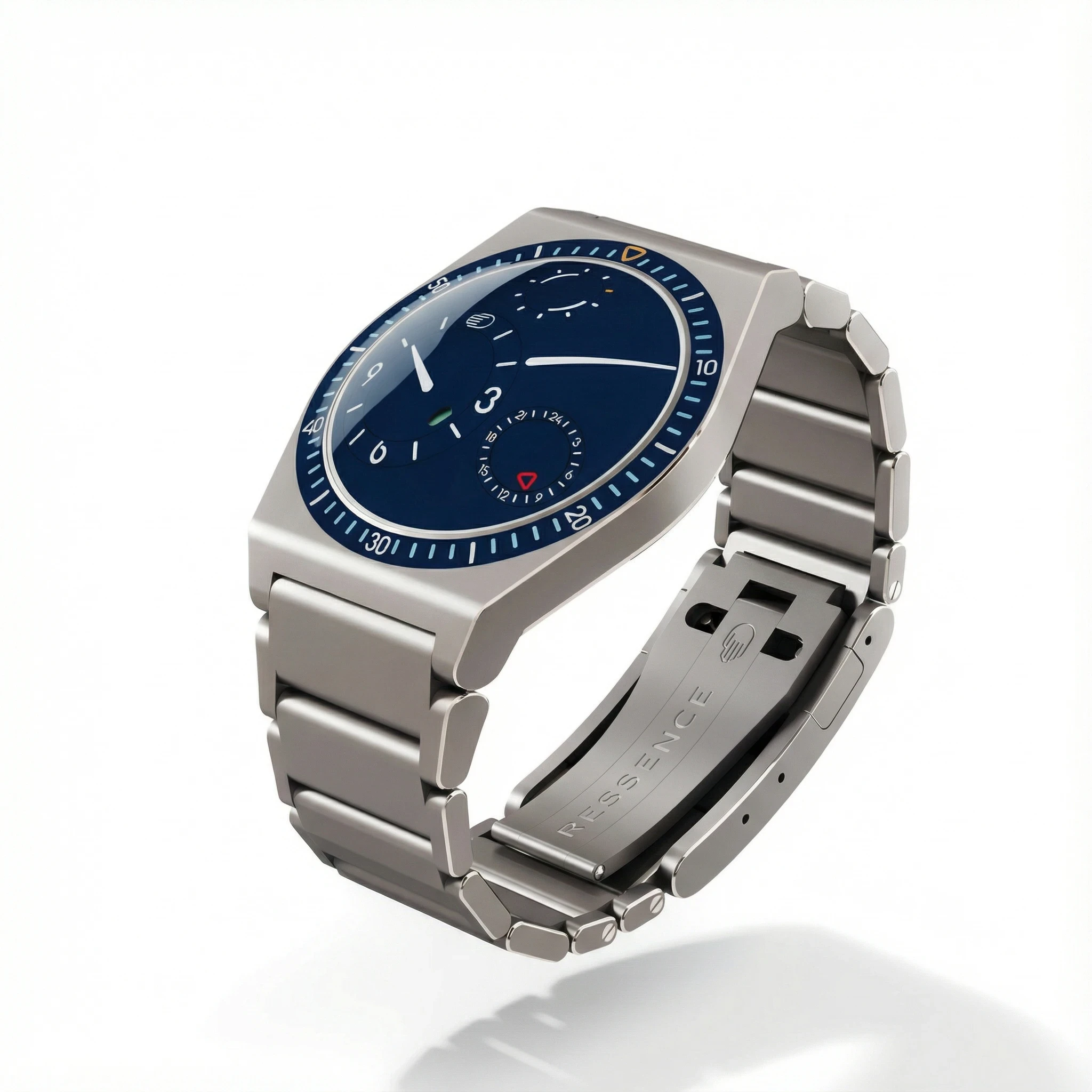
Rank 42. Ressence
Founded: 2010, Belgium
Founder: Benoît Mintiens
Ownership: Independent
Output: ~300 watches/year
Famous for: Oil-filled displays, orbital time indication
Why here: Ergonomic minimalism with fluidic visual effect; a watch you feel more than read.
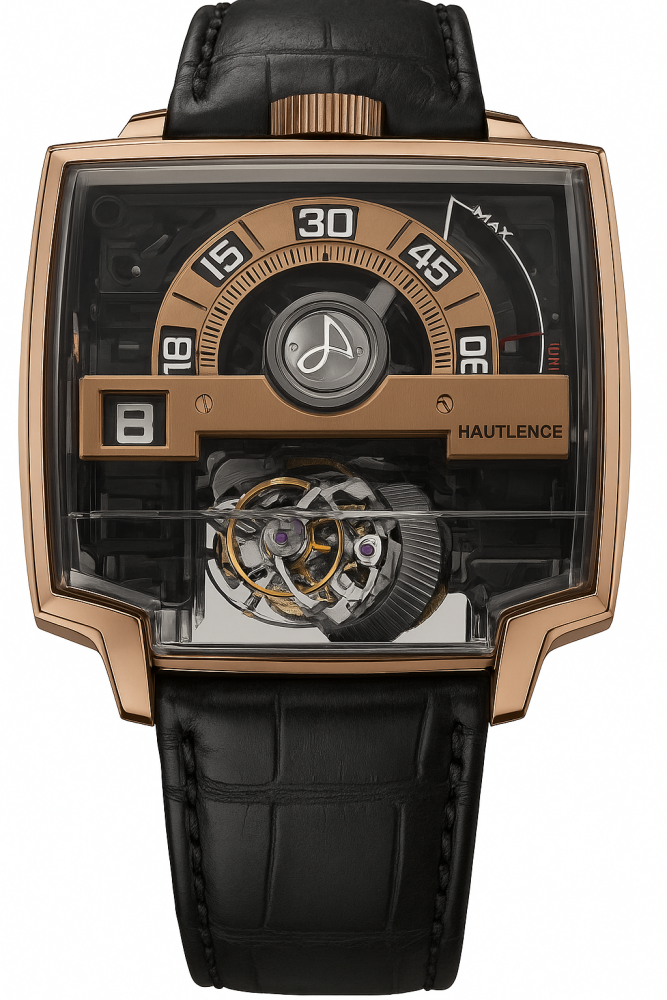
Rank 43. Hautlence
Founded: 2004, Switzerland
Ownership: Independent (part of MELB Holding)
Output: ~200–300 watches/year
Famous for: Jumping hours, retrograde mechanisms
Why here: Boundary-pushing case design and kinetic complication playfulness.
Rank 44. MCT (Manufacture Contemporaine du Temps)
Founded: 2007, Switzerland
Founder: Denis Giguet
Ownership: Independent
Output: ~100–150 watches/year
Famous for: Sequential display, bold geometries
Why here: Retro-futurism with intricate digital-style mechanical displays.

Manufacture Contemporaine du Temps Official Website
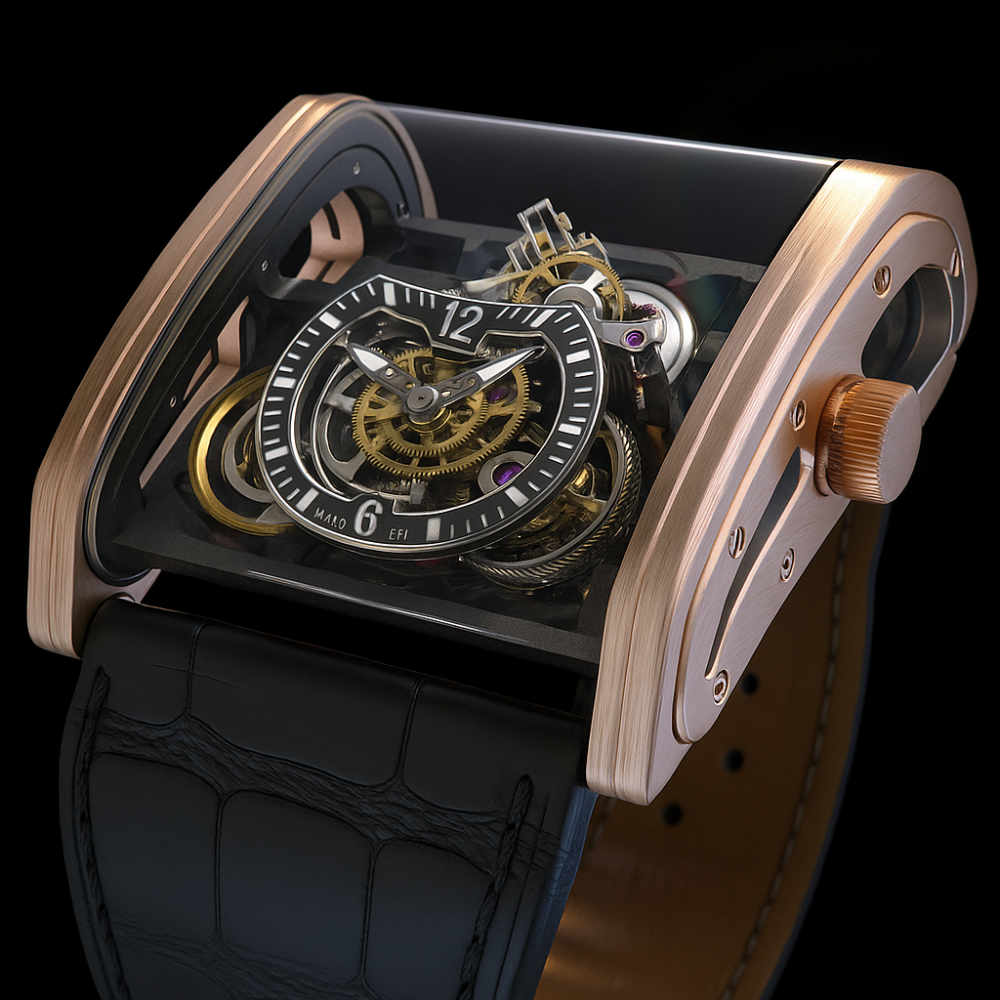
Rank 45. Cabestan
Founded: 2003, Switzerland
Founder: Jean-François Ruchonnet
Ownership: Independent (defunct since ~2019)
Output: Ultra-low volume
Famous for: Vertical movement architecture
Why here: Micro-mechanical steampunk aesthetics and vertical-fusee mechanisms.
Rank 46. Czapek & Cie
Founded: 1845 (revived 2012), Switzerland
Founder: François Czapek
Ownership: Independent (crowdfunded relaunch)
Output: ~250–500 watches/year
Famous for: Quai des Bergues, Antarctique
Why here: Neo-classical revival with elite finishing and original design spirit.
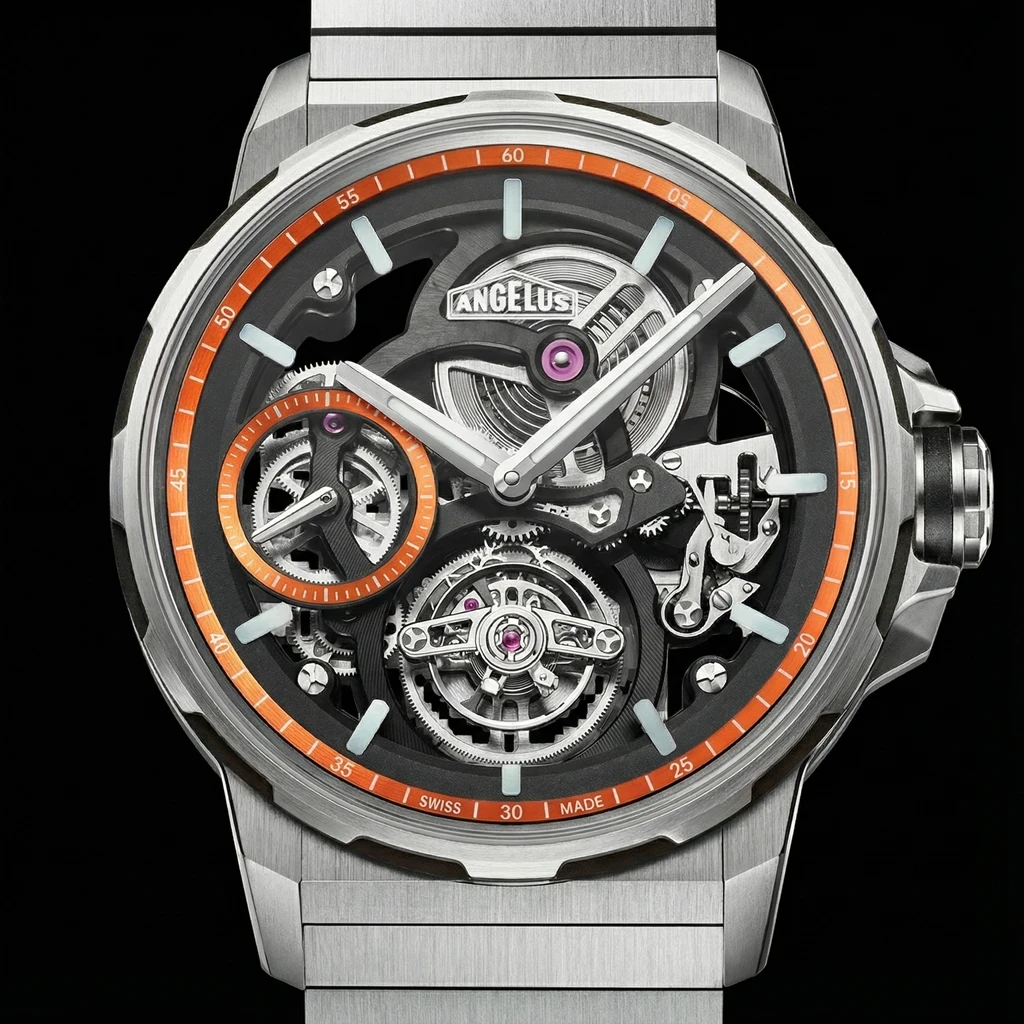
Rank 47. Angelus
Founded: 1891 (revived 2015), Switzerland
Ownership: Citizen Group (via La Joux-Perret)
Output: ~ 70 to 100 watches/year
Famous for: U10, U21, skeleton tourbillons
Why here: Once an innovator in chronographs, now revived with a focus on modern tech and aggressive forms.
Level 5: Entry-Level Accessible Luxury Watch Brands
Criteria: These are entry-level luxury brands that are financially accessible to most people. These brands are excellent, well-made, robust, dependable, reliable, have relatively accurate automatic movements, but they are still massproduced, standardized, generic, with very little craftsmanship, mechanical innovation and almost non-existent polishing of movements.
Level 5 luxury watch brands very often rely on outsourced and standardized ETA movements from Swatch Group, and Sellita movements from Sellita. These brands do have historical weight and gravitas though and they are well-known among most people, in similarity to the brands of Level 3.
Back to Table of Contents / Conclusion and Summary of the Ranking: All 50 Brands
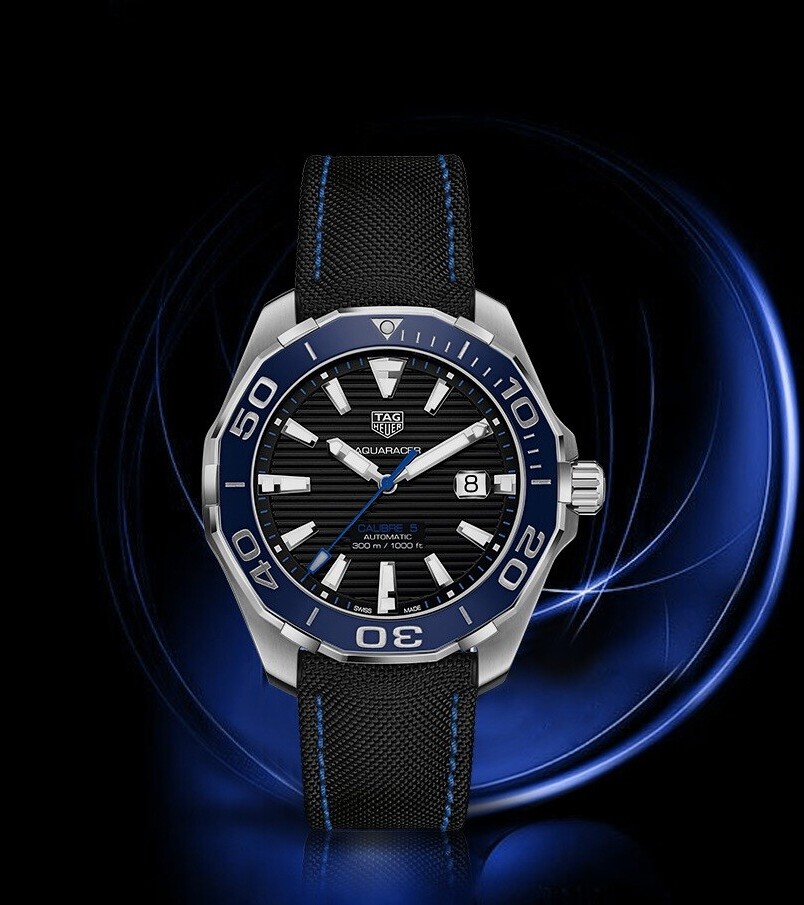
Rank 48. TAG Heuer
Founded: 1860, Switzerland
Founder: Edouard Heuer
Ownership: LVMH Group
Famous for: Carrera, Monaco, Aquaracer
Output: ~500,000+ watches/year
Why Tier 5: Deep motorsport heritage and brand recognition, but limited horological innovation and reliance on outsourced or modified movements. Known for design flair more than watchmaking purity.
Rank 49. Longines
Founded: 1832, Switzerland
Founder: Auguste Agassiz
Ownership: Swatch Group
Famous for: HydroConquest, Master Collection, Spirit
Output: ~1 million watches/year
Why Tier 5: One of the most established mid-luxury brands with strong legacy and mass appeal, but few technical standouts in modern horology.

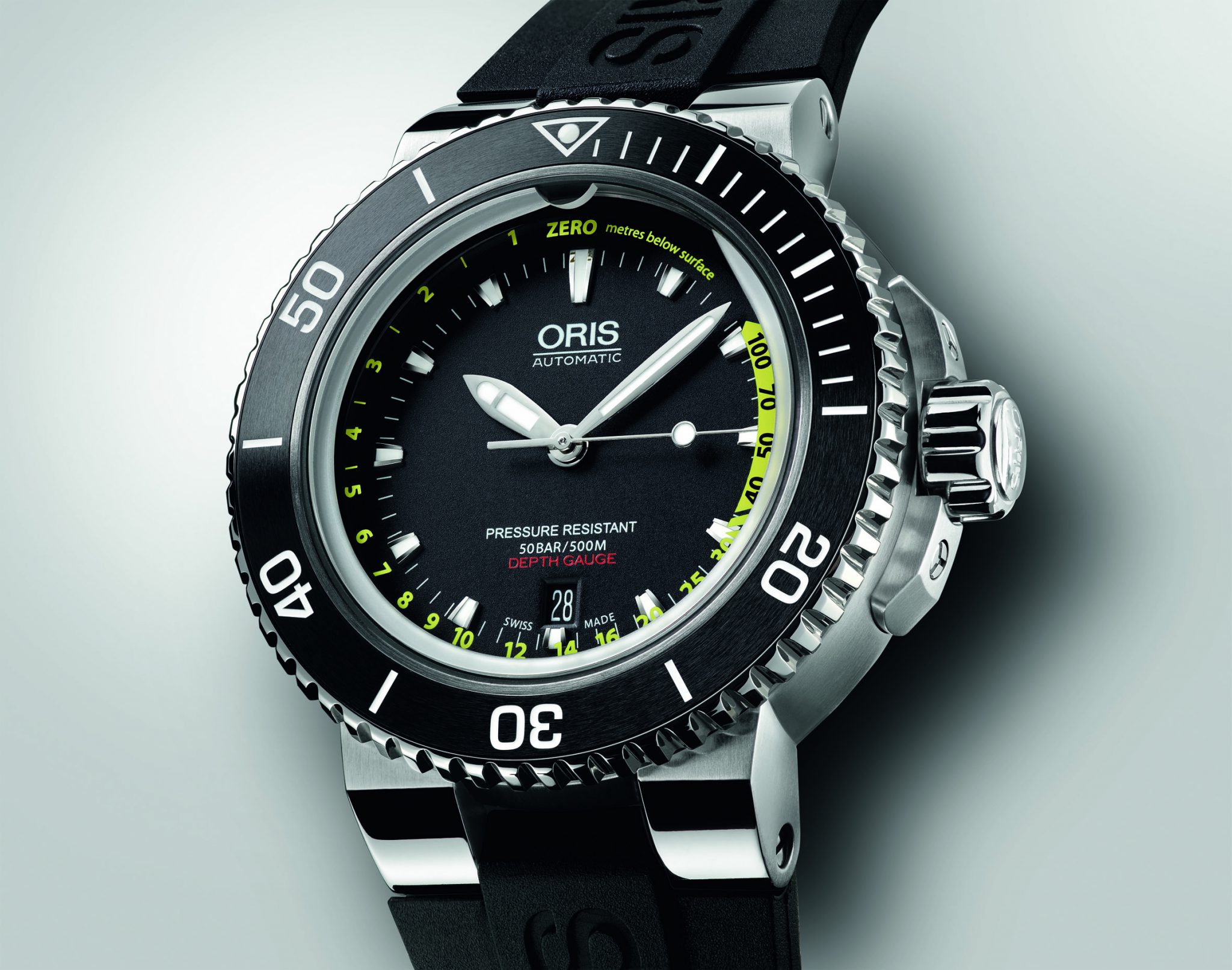
Rank 50. Oris
Founded: 1904, Switzerland
Founder: Paul Cattin & Georges Christian
Ownership: Independent
Famous for: Big Crown, Aquis, Divers Sixty-Five
Output: ~50,000–60,000 watches/year
Why Tier 5: Admirably independent with strong value and growing in-house development, but still mostly entry-level in technical terms.
Conclusion and Summary of the Ranking: All 50 Brands
There you have it. These are the top 50 luxury watch brands in the world as I see it, updated for 2025, based on my experience in the world of luxury watches for well over a decade now.
Below these top 50 luxury watch brands, you have literally thousands of watch brands and watch manufacturers out there that haven’t even been mentioned on this list. The Top 50 within the world of luxury watch brands is a very exclusive club indeed.
You can see a summary of the top 50 luxury watch brands down below:
Level 1: The Elite of Luxury Watchmakers (High Horology Titans)
Level 2: Independent High Horology Masters
Level 3: Established and Iconic Luxury Watch Brands
Level 4: Experimental Luxury Watch Brands
Rank 38) MB&F (Maximilian Büsser & Friends)
Rank 40) HYT (Hydro Mechanical Horologists)
Rank 44) MCT (Manufacture Contemporaine du Temps)
Level 5: Entry-Level Accessible Luxury Watch Brands
A short explanation for the Level 5 luxury watch brands: I likely would have included maybe 20-30 luxury watch brands in total for Level 5, but since this article is limited to the “top 50,” it means that I had to limit myself to the “top three” within Level 5 in order not to exceed the “top 50” limit.
It does not mean that I would consider Level 5 luxury watch brands to be limited to just three commercial brands. It simply means that TAG Heuer, Longines, and Oris are the three particular Level 5 luxury watch brands that made it to the top 50 list.
Let’s move on to the next topic down below, and that touches upon the legal, administrative, industrial, financial, and creative status of the luxury watch brands.
What does it truly mean when a luxury watch brand or manufacturer is considered to be “independent”?
Back to Table of Contents / Conclusion and Summary of the Ranking: All 50 Brands
Is Rolex Independent? What About Others?
A recurring question arises:
Is Rolex truly independent? The short answer is yes—structurally, legally, and operationally.
- Rolex is owned by the Hans Wilsdorf Foundation, a private, non-profit entity established by founder Hans Wilsdorf. While it functions much like a traditional company, its profits are not publicly distributed to shareholders, and it maintains full creative, technical, and strategic autonomy. Rolex designs and manufactures its movements, cases, bracelets, and even its gold alloys entirely in-house.
That makes Rolex legally independent, even if it doesn’t align with the modern notion of “indie horology” as defined by artisanal microbrands like Philippe Dufour, Kari Voutilainen, or Romain Gauthier. These smaller brands focus on hyper-limited production, artistic movement finishing, and aesthetic freedom—hallmarks of the Independent High Horology Masters in Level 2.
Other independently owned brands in this list include:
- Audemars Piguet – Still owned by its founding family.
- Patek Philippe – Privately owned by the Stern family.
- Chopard – Independently owned by the Scheufele family.
- Richard Mille – Privately owned and operated.
- Oris – Independent, not part of a conglomerate.
- Breitling – Owned by private equity firm Partners Group, but not under a watchmaking conglomerate umbrella.
So while “independent” can mean different things to different readers, we make this distinction clear in our ranking:
- Level 2: Independent High Horology Masters refers specifically to small-scale, artisanal, and boundary-pushing watchmakers.
- Independently owned brands (like Rolex or Audemars Piguet) are structurally independent, but are often large-scale and functionally mainstream in comparison.
Back to Table of Contents / Conclusion and Summary of the Ranking: All 50 Brands
Final Thoughts: Choosing Your Brand
Over the past decade, the luxury watch landscape has continued to evolve, reflecting a changing balance between artisanal mastery, independent innovation, historical gravitas, and brand storytelling. This new 2025 ranking seeks to transcend mere prestige or marketing clout and instead focuses on substance: finishing, mechanics, legacy, horological contribution, and originality.
Where the 2015 ranking emphasized fame and market perception, the 2025 edition rewards craftsmanship, innovation, and enduring value. Some well-known names have moved down the ladder, while less familiar independent maisons have risen into elite positions based on technical merit and horological artistry.
Ultimately, this guide is meant not only to inform but to inspire.
Whether you’re a seasoned collector or a passionate enthusiast, remember: True luxury doesn’t need to scream—it whispers to your soul.
Back to Table of Contents / Conclusion and Summary of the Ranking: All 50 Brands
If you have any comments or questions please drop them below and I’ll be happy to answer them!
Article written by Alexander – Founder and Owner of swissdiverswatches.com

What about Louis Vuitton and some of their more recent Escale line, like the Snake’s Jungle, the new minute repeater, etc? Some of their watches are created and overseen by Michel Navas.
Hi Tony, and a very warm welcome to Swiss Divers Watches.
The Escale line by Louis Vuitton would definitely qualify as higher watchmaking, but the problem is that
1) The movement complications that Louis Vuitton is utilizing weren’t invented by them. They’ve used existing technology and horology invented by other luxury watchmakers. Louis Vuitton didn’t revolutionize watchmaking as we know it, nor did they create the foundation of horology (watchmaking), nor do they necessarily improve on existing technology/mechanical or automatic movements, nor do they make any radical contributions, inventions, or new creations to push the boundaries of watchmaking.
2) The movement finishing, aesthetics, craftsmanship, and attention to detail aren’t on the same level as, say, Level 1 and Level 2.
3) Louis Vuitton is a designer house that makes a large range of products, with wristwatches being only one category of products, and therefore, for this very reason, you can’t compare Louis Vuitton to high-horology luxury watchmakers that specialize in watchmaking.
I hope I’ve satisfactorily answered all your questions, Tony, and if you’ve got additional thoughts, don’t hesitate to get back to me for additional inquiries.
Cheers!
Alexander